
What Do You Need to Be a Sports Massage Therapist in Australia?
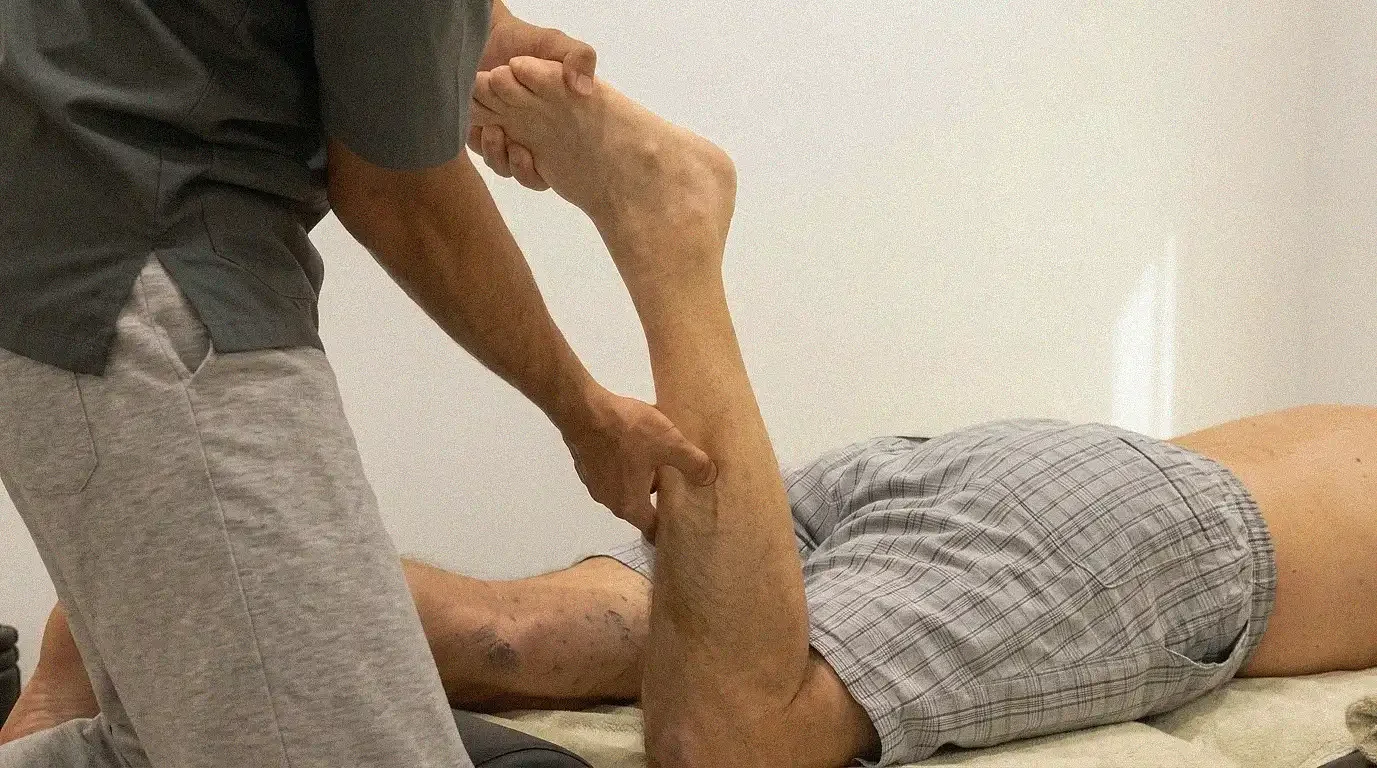
If you want to work professionally as a sports massage therapist in Australia, the Diploma of Remedial Massage is a strong qualification pathway.
The current HLT52021 Diploma includes 21 units and at least 200 hours of clinical work, including assessment, treatment, legal and ethical practice, and working with other health professionals.
Certificate III and IV in Fitness aren't mandatory sports massage qualifications, but I've found my fitness background useful for understanding training, exercise and movement.
Practical experience matters. During my own Diploma at TAFE NSW Macquarie Fields, I had opportunities to work with athletes, including ultramarathon runners in Katoomba and Sydney Kings players.
Getting qualified is the beginning. Communication, assessment, knowing your scope and understanding what athletes actually do in training become increasingly important once you start working with real clients.
If you're wondering what you need to be a sports massage therapist, there's a difference between what you're legally required to have in Australia and what I'd recommend if you actually want to work professionally with athletes and active people.
Australia doesn't legally require every massage therapist to hold a formal qualification. But that doesn't mean I'd recommend learning a few massage techniques and immediately advertising yourself as a sports massage therapist.
My own pathway included a Diploma of Remedial Massage, Certificate III and IV in Fitness and practical experience working with athletes while I was studying. Since then, I've completed more than 3,000 treatment sessions across 4+ years of practice.
Here's what I'd consider important if you're thinking about taking a similar path.
What Do You Need to Be a Sports Massage Therapist?
A Diploma of Remedial Massage is a strong starting point if you want formal training that covers massage treatment, musculoskeletal assessment, clinical practice and working professionally with clients.
The current nationally recognised qualification is the HLT52021 Diploma of Remedial Massage.
According to the Australian Government's training register, the qualification requires 21 units: 18 core units and three electives. It also requires at least 200 hours of work in a simulated clinical environment.
Those core units aren't limited to learning massage techniques. They cover areas including:
Assessing a client's massage needs
Musculoskeletal assessment
Providing remedial massage treatment
Adapting treatment to specific needs
Understanding and responding to health information
Legal and ethical compliance
Evidence-informed practice
Working with health professionals and the health system
That's much closer to what you'll actually need when someone walks into a clinic with a specific problem.
Do You Legally Need a Qualification to Call Yourself a Sports Massage Therapist?
Massage therapists in Australia aren't legally required to hold formal qualifications to practise.
That's the current position reported by the Australian Government-funded Healthdirect, which also recommends looking for properly trained and insured therapists registered with a professional association.
The current Diploma itself also has no occupational licensing, certification or specific legislative requirement attached to the qualification. You can see that in the official qualification details.
I think it's important to separate that legal position from the question of professional competence.
If I were choosing somebody to work on me as an athlete, I'd want to know that person had actually studied anatomy, assessment, treatment, contraindications, clinical reasoning, professional boundaries and when something needs to be referred elsewhere.
Being legally able to offer massage and being properly prepared to work with clients aren't the same question.
Why I Chose the Diploma of Remedial Massage
My sports massage background started through the Diploma of Remedial Massage at TAFE NSW Macquarie Fields.
Sports massage therapy was part of my training during the Diploma, but one of the most useful parts was getting exposure to actual athletes.
One of my teachers, Donna West, helped give students opportunities to work around sporting events and athletes.
Through those opportunities, I got experience working with ultramarathon runners in Katoomba and players from the Sydney Kings.
I don't say that to imply I was an official therapist for the Sydney Kings. I wasn't.
I was a student learning my craft and getting the opportunity to apply what I'd been taught around people who were actually training and competing.
That experience was valuable because athletes don't arrive as textbook examples.
Someone might have just finished an event. Someone else might be preparing to compete. Another athlete might be dealing with muscular soreness or a movement that doesn't feel right.
You have to communicate with the person in front of you and adjust what you're doing accordingly.
What Do You Learn in a Diploma of Remedial Massage?
A Diploma of Remedial Massage teaches considerably more than how to perform massage techniques.
The current HLT52021 qualification requires 21 units and a minimum of 200 clinical hours, according to the National Training Register.
TAFE NSW describes its current Diploma as including practical and theoretical training in remedial treatment, musculoskeletal assessment, adapting treatment to individual needs and legal and ethical compliance. Students also complete 200 clinical hours.
That assessment component becomes particularly relevant when you start working with active clients.
Someone might say:
“My shoulder feels tight.”
That's useful information, but it isn't the end of the conversation.
When does it feel tight?
What movements bring it on?
Does it happen when pressing overhead?
Does it affect hanging from a bar?
What happens during a snatch or overhead squat?
Has their training recently changed?
You need to know what questions to ask and what you're actually looking at.
That's a big part of the way I now approach sports massage at My Massage Therapist.
Do You Need Certificate III and IV in Fitness for Sports Massage?
No. Certificate III and IV in Fitness aren't mandatory qualifications for completing the Diploma of Remedial Massage or calling yourself a sports massage therapist.
They're part of my educational background, and I've found them useful.
The current Certificate III in Fitness includes areas such as pre-exercise screening, fitness assessments and using anatomy and physiology knowledge when delivering exercise.
For me, that education complements massage.
If you want to work with someone who squats, deadlifts, runs, does CrossFit or competes in HYROX, it helps to understand what they're talking about.
When someone tells me their problem appears at the bottom of a squat, during an RDL or when receiving a snatch, I don't want the exercise itself to be a foreign language.
I want to understand what they're doing.
My fitness qualifications also complement the exercise prescription I sometimes use as part of aftercare where appropriate.
That doesn't turn massage therapy into physiotherapy, and I don't provide comprehensive physiotherapy rehabilitation.
It simply gives me another useful skill set within my scope.
Why Does Understanding Training Matter With Athletes?
Understanding training helps you put a client's muscular symptoms into context instead of looking only at the area they're pointing to.
After 4+ years and more than 3,000 treatment sessions, I've worked with CrossFit athletes, runners, powerlifters, HYROX competitors, basketball and rugby players, gym-goers and other active clients.
Different sports place different demands on people.
A runner talking about calf soreness after increasing weekly kilometres is giving you different information from a CrossFit athlete struggling to get comfortably into an overhead squat.
A basketball player during a demanding competitive period can present differently again.
This is where knowing the sport helps.
You don't have to be an expert coach in every sport your clients participate in.
But if you want to call yourself a sports massage therapist, I think you should be interested enough to learn what your clients are actually doing.
Do You Need Practical Experience With Athletes?
Practical experience with athletes isn't listed as a separate national licensing requirement, but getting real clinical experience is an important part of learning to work professionally.
The Diploma itself reflects this. The current qualification requires at least 200 clinical hours.
For me, the sporting opportunities I received while studying were particularly valuable.
You can learn anatomy from a book.
You can practise techniques in class.
But eventually you need somebody in front of you saying, “This is what I'm feeling, this is what I'm training for, and this is what I need to be able to do.”
That's where communication starts to matter just as much as technique.
It's also where you learn that sports massage isn't simply about applying maximum pressure to athletes.
Sometimes the treatment needs to be firmer. Sometimes it doesn't.
Sometimes somebody is preparing for competition. Sometimes they've just competed.
Sometimes what they describe makes you think they need to see another health professional rather than receive more massage.
Experience helps develop that judgement.
Do You Need Insurance and Professional Membership?
Professional membership and appropriate insurance are worth considering if you're going to work with paying clients.
Healthdirect recommends choosing a therapist who is appropriately trained and insured and points consumers towards professional massage associations, including the Association of Massage Therapists. You can read its advice on choosing a massage therapist.
I'm personally a member of the Association of Massage Therapists (AMT) and hold professional indemnity and public liability insurance.
Professional membership isn't a substitute for being competent.
Neither is a certificate hanging on a wall.
But professional standards, insurance and continuing education are all part of treating massage therapy like an actual profession rather than something you learnt over a weekend.
What Skills Matter Beyond Massage Technique?
Good sports massage involves more than knowing where muscles are and how to massage them.
The Australian occupation profile for massage therapists includes tasks such as assessing a person's physical condition and case history, performing soft-tissue techniques and providing advice on techniques such as stretching exercises. The education data also show that 50.1% of massage therapists had an Advanced Diploma or Diploma as their highest educational attainment in the 2021 Census data reported by Jobs and Skills Australia.
In my day-to-day work, some of the most important skills are less exciting than learning a new treatment technique.
You need to be able to listen.
You need to ask useful questions.
You need to know your scope.
You need to recognise when you don't have the answer.
You need to explain what you've found without pretending you've medically diagnosed an injury.
You also need to adapt.
I don't want every person who walks into My Massage Therapist to receive exactly the same routine because they booked the same appointment length.
My remedial massage and sports massage appointments are assessment-led. What I do depends on the person's presentation, goals and what I find during the relevant assessment.
What I've Learnt After More Than 3,000 Treatment Sessions
The qualification gives you the foundation. Working with real people teaches you how much variation exists outside the classroom.
One thing I've learnt is not to become too focused on the painful spot.
If somebody tells me their shoulder hurts during lifting, I still want to look at the shoulder. But I also want to know what lift causes it, what their shoulder movement looks like, what their strength looks like and whether anything else relevant stands out.
The same applies to somebody whose knee is bothering them during squats or whose back becomes uncomfortable when hinging.
Another lesson is that you don't always need to tell an athlete to stop everything.
Where it's appropriate, I prefer to look at whether an aggravating movement can be modified or regressed while the person maintains tolerable activity.
There are obviously situations where different advice or referral is needed.
That's why knowing your limits matters.
I've also learnt that the work clients do outside the treatment room can matter.
Depending on the person, that might mean a warm-up change, a mobility exercise, some strengthening work, a temporary adjustment to training or a practical self-management strategy.
That's the approach I've developed through my own education and experience. It isn't the only way to practise sports massage.
Is Sports Massage Therapy a Good Career?
Sports massage therapy can be a rewarding career if you enjoy working with people, physical work, sport and problem-solving.
But I wouldn't choose it purely because you like getting massages or watching sport.
You're working directly with people who may be sore, frustrated or unsure about what they're feeling.
You need to communicate professionally.
You need to keep learning.
You also need to be comfortable with the physical demands of providing hands-on treatment throughout the week.
And if you're self-employed, you're running a business as well as being a therapist.
The Diploma reflects some of that reality. One of its core units is developing business plans, alongside units covering client relationships, legal compliance and clinical practice. You can see the complete current unit structure on the training register.
If those parts of the job appeal to you as much as the hands-on treatment, it may be worth exploring further.
Frequently Asked Questions
Do You Need a University Degree to Become a Sports Massage Therapist?
No. You don't need a university degree to work as a massage therapist in Australia.
The Diploma of Remedial Massage is a nationally recognised vocational qualification rather than a university degree.
How Long Does It Take to Become a Sports Massage Therapist?
There isn't one universal timeframe because course delivery and individual circumstances can vary.
Rather than choosing a course purely because it promises the fastest completion, check that you're completing the nationally recognised qualification and getting the required practical experience.
The current HLT52021 Diploma requires at least 200 hours of clinical work.
Do You Need Certificate III and IV in Fitness?
No.
I have Certificate III and IV in Fitness, and they've been useful in the way I work with athletes and active clients, but they aren't mandatory prerequisites for the Diploma of Remedial Massage.
Do You Have to Be Athletic Yourself?
No.
You don't need to compete in CrossFit, run marathons or play professional sport to become a sports massage therapist.
What matters more is your education, practical skills, communication, professionalism and willingness to understand the activities your clients are doing.
Is a Sports Massage Therapist the Same as a Physiotherapist?
No.
A sports massage therapist and a physiotherapist have different qualifications and scopes of practice.
I'm a qualified Remedial Massage Therapist. I'm not a physiotherapist, chiropractor, osteopath or doctor, and I don't present massage assessment as a medical diagnosis.
Knowing that boundary is part of working professionally.
Can You Specialise in Sports Massage After Your Diploma?
You can build your professional experience towards particular client groups after qualifying.
That's essentially what happened with me.
My Diploma gave me the remedial massage foundation and some early exposure to sports massage and athletes. My fitness qualifications added another layer of knowledge.
Then years of working with CrossFit athletes, lifters, runners, gym-goers and other active clients helped shape the way I now practise.
What Do You Really Need to Be a Sports Massage Therapist?
If you're serious about becoming a sports massage therapist, I'd focus on getting a solid education first and then building practical experience.
For me, the Diploma of Remedial Massage was that foundation.
Certificate III and IV in Fitness have also been valuable because of the type of clients I work with, although they're not mandatory sports massage qualifications.
The other parts develop with experience: learning how to assess people, understanding different sports, communicating clearly, adapting your treatment, knowing your professional scope and recognising when somebody needs to be referred elsewhere.
I was fortunate during my Diploma at TAFE NSW Macquarie Fields to get early exposure to athletes through Donna West, including ultramarathon runners in Katoomba and Sydney Kings players.
But graduating didn't mean I'd finished learning.
More than 3,000 treatment sessions later, I'm still developing how I assess, treat and communicate with the person in front of me.
If you're interested in seeing what my approach looks like now, you can read more about my sports massage service in Liverpool.
