

How Is a Sports Massage Different From a Regular Massage?
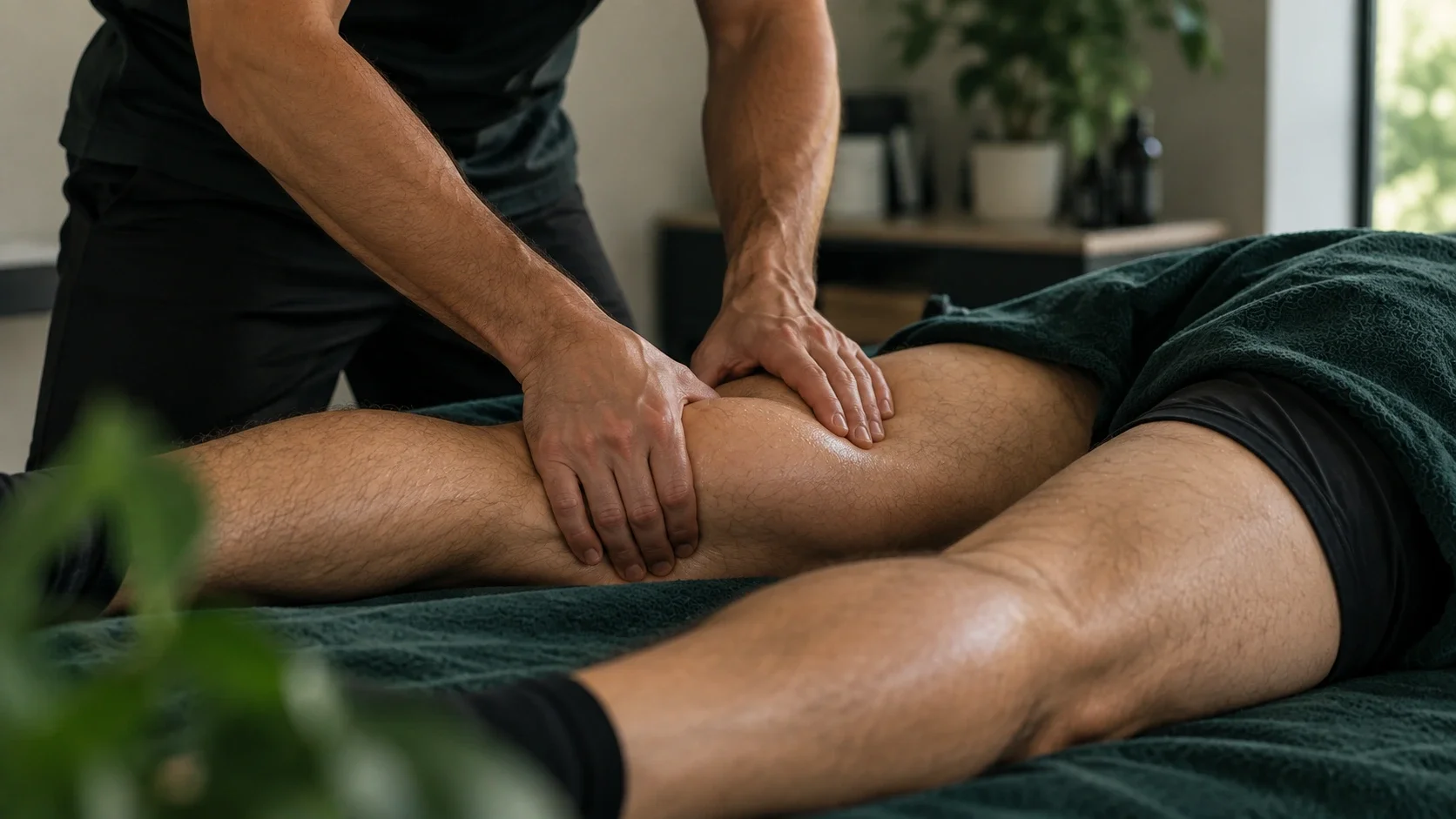
Sports massage is usually more targeted and goal-focused than a general massage.
It doesn't simply mean harder pressure or a more painful massage.
At My Massage Therapist, sports massage can include discussion of your training, relevant movement or strength assessment, targeted treatment, reassessment and aftercare.
You don't need to be a competitive athlete. Runners, lifters, CrossFit members, gym-goers and other active people can all have reasons to choose sports massage.
The right massage depends on what you want from the appointment, not which treatment sounds more intense.
If you're wondering how a sports massage is different from a regular massage, the biggest difference is usually the purpose of the appointment.
A regular massage can mean many different things, from relaxation massage through to other therapeutic styles. Sports massage is generally more targeted towards your training, movement, muscular soreness, restrictions and what you're trying to get back to doing.
For me, that distinction matters much more than how hard someone presses.
How Is a Sports Massage Different From a Regular Massage?
Sports massage is generally more targeted towards a specific training, movement or muscular problem, while a regular relaxation-style massage may focus more broadly on comfort and relaxation.
Even the term “regular massage” is fairly broad. The US National Center for Complementary and Integrative Health explains that massage therapy includes many different techniques, including Swedish or classical massage, sports massage and clinical approaches used for specific goals.
So it isn't really a case of one massage being “real massage” and another being completely different.
The bigger difference is why you're there and how the appointment is structured.
At My Massage Therapist in Liverpool, my sports massage appointments are assessment-led.
If you tell me your shoulder feels restricted when receiving a snatch, your calves are struggling with an increase in running volume, or a particular area keeps bothering you during training, that gives the appointment a specific direction.
I'm not simply asking where you'd like a massage.
I'm trying to understand what's happening when you move and train.
Is Sports Massage Just a Deeper Massage?
No. Sports massage doesn't automatically mean deeper pressure, and harder treatment doesn't automatically mean better treatment.
This is probably one of the biggest misconceptions I come across.
People sometimes expect sports massage to mean gritting their teeth for an hour while somebody applies as much pressure as possible.
That's not how I approach it.
Pressure should be graded to the person and what you're presenting with. Very deep pressure, severe discomfort or bruising doesn't automatically mean you've received more effective treatment.
There are also legitimate safety reasons not to treat “harder” as synonymous with “better”. The NCCIH notes that massage generally has a low risk of harmful effects, but rare serious adverse events have been reported, with some involving vigorous massage.
Sometimes firmer treatment may be appropriate. Sometimes it won't be.
The decision should have a reason behind it.
What Happens During a Sports Massage?
A sports massage appointment can involve assessment, targeted hands-on treatment and reassessment rather than spending the entire appointment doing massage.
At My Massage Therapist, I'll usually start by getting relevant information about your symptoms, health, training and what you're trying to achieve.
Depending on why you've booked, I may then look at things such as:
Relevant movement
Range of motion
Strength
Which positions reproduce the problem
What has changed in your training
What you can and can't currently do comfortably
That information helps guide the hands-on treatment.
Techniques can include sports and remedial massage, deep tissue techniques, trigger point work, stretching and IASTM where appropriate.
I can then reassess relevant findings afterwards.
That last part matters.
If we identified a restricted movement before treatment, for example, checking it again afterwards gives us more useful information than simply assuming the treatment helped because it felt intense.
Do You Have to Be an Athlete to Get a Sports Massage?
No. You don't have to compete professionally, play for a sports team or even call yourself an athlete to get a sports massage.
I work with CrossFit athletes, runners, powerlifters, HYROX competitors, basketball and rugby players, gym-goers and other active people.
What matters is what you're doing physically and what you want help with.
Someone who trains at a Liverpool gym three times a week can have a perfectly valid reason for sports massage.
So can someone preparing for their first running event.
The word “sports” describes the context and approach. It isn't an entry requirement.
Is Sports Massage Better for Gym-Goers?
Sports massage can make sense for gym-goers when there's a particular training-related reason for the appointment, but that doesn't make it automatically better than every other type of massage.
For example, you might notice:
Your shoulder feels restricted during overhead pressing
Your hips feel uncomfortable during squats
Your calves are repeatedly sore after running
A muscular problem keeps affecting a particular lift
You've increased your training volume and certain areas are feeling heavily worked
You're preparing for an event or competition
Those are situations where understanding your training becomes useful.
I've completed more than 3,000 massage sessions over 4+ years, and a large part of my work involves active people.
With CrossFit clients in particular, I don't just hear “my shoulder is tight” and immediately start massaging the shoulder.
I want to know where they notice it.
Is it pressing overhead? Hanging from a bar? During a snatch? In the receiving position of an overhead squat?
Those details can change what I assess and how I approach the appointment.
Does Sports Massage Improve Athletic Performance?
Sports massage shouldn't be sold as a guaranteed way to improve athletic performance.
This is where expectations need to stay realistic.
A major systematic review examined 29 studies involving 1,012 participants. Researchers found no evidence that massage directly improved strength, jumping, sprinting, endurance or fatigue.
They did find small but statistically significant improvements in flexibility and delayed onset muscle soreness (DOMS).
An earlier review looking at massage after strenuous exercise also found mixed evidence for performance and recovery outcomes, while some studies showed benefits for DOMS symptoms.
So I wouldn't tell a client:
“Get a sports massage and you'll lift more tomorrow.”
That's not supported.
A more reasonable goal might be addressing muscular soreness, working on a relevant restriction or helping someone feel more comfortable around their training.
Is Sports Massage Only for Injuries?
No. You don't need to be injured to book a sports massage.
People also book because of muscular soreness, tightness, movement restrictions or the demands of a particular training period.
That distinction is important because I'm a Remedial Massage Therapist, not a physiotherapist or doctor.
I can assess relevant movement, strength, range of motion and muscular findings within my scope. I don't promise a medical diagnosis.
If your presentation suggests something outside my scope, referral may be more appropriate than continuing to massage it.
This is especially relevant when symptoms involve things such as numbness, tingling, shooting or radiating sensations.
Massage shouldn't be used to delay appropriate healthcare. The NCCIH similarly advises people not to postpone healthcare for a medical problem because they're receiving massage.
What's the Difference Between Sports Massage and Relaxation Massage?
The main difference is usually the goal: relaxation massage generally prioritises relaxation and a broader massage experience, while sports massage is more likely to target specific areas based on training, movement or muscular symptoms.
That doesn't mean sports massage can't feel good.
And it doesn't mean relaxation massage has no value.
They're simply appointments people may choose for different reasons.
If you've had a stressful week and want a general massage to relax, that's different from coming in because your calf repeatedly becomes uncomfortable 8 km into a run.
In the second situation, I want more information.
What's your weekly running volume? Has it recently increased? When does the problem appear? What happens when you slow down? What does the relevant movement and strength assessment show?
That information gives the appointment direction.
What Is the Difference Between Sports Massage and Remedial Massage?
Sports massage and remedial massage can overlap considerably, particularly when treatment is targeted towards a specific muscular or movement-related problem.
At My Massage Therapist, both are assessment-led.
My remedial massage service focuses on muscular tension, discomfort and movement restriction rather than providing a routine full-body massage.
Sports massage brings training and sporting demands more directly into that process.
In practice, the techniques themselves aren't necessarily what separates the two.
I might use similar hands-on techniques in either appointment.
The context is often the important part.
For an active client, I may need to understand what movements they're performing, how much they're training and what they need to return to afterwards.
Does Sports Massage Include Exercises?
It can, where appropriate.
Sometimes the hands-on treatment is only part of what makes sense for the problem.
If I identify something relevant during your assessment, I may provide a stretch, strengthening exercise, mobility drill, movement-control exercise or activity modification to work on outside the clinic.
My exercise prescription is used alongside massage where appropriate rather than as a standalone rehabilitation service.
I generally provide exercises as a PDF so you have something practical to refer back to.
Not everyone needs exercises after every appointment.
If I give you something, I want there to be a reason for it.
Should Sports Massage Hurt More Than Regular Massage?
No. Sports massage doesn't have to hurt more to be effective.
You might experience tenderness when an already sensitive or heavily worked area is treated, but severe pain isn't the goal.
I don't use pain tolerance as a measure of whether somebody is athletic enough for sports massage.
And I don't think you should leave believing that a treatment only worked because you survived it.
Pressure, techniques and treatment intensity should fit the individual.
How Do You Choose Between Sports Massage and Regular Massage?
Choose based on what you want help with rather than assuming sports massage is simply the stronger option.
If your main goal is relaxation and a general massage experience, a relaxation-style massage may be more appropriate.
If you're dealing with something related to training, muscular soreness, movement restriction or a particular physical activity, sports massage may make more sense.
A few useful questions are:
Why am I booking?
Are you looking to relax, or is there something specific affecting your movement or training?Do I want an assessment?
If there's a specific problem, looking at relevant movement or strength may provide useful context.Is training part of the problem?
If your symptoms appear during running, lifting or sport, your therapist understanding those demands can be useful.Do I need practical aftercare?
If appropriate, exercises or temporary training modifications may form part of your appointment.
The name of the massage matters less than whether the appointment actually matches what you need.
What Does Sports Massage Look Like at My Massage Therapist in Liverpool?
At My Massage Therapist, sports massage is an assessment-led service for active people rather than a harder version of a standard massage.
I'm based at 92 Flowerdale Road, Liverpool NSW 2170, working with clients from Liverpool and across South West Sydney.
Your appointment can include relevant health, symptom and training history, movement or strength assessment where appropriate, targeted hands-on treatment, reassessment and practical aftercare.
I have 4+ years of experience and have completed more than 3,000 massage sessions, including working with CrossFit athletes, runners, lifters, HYROX competitors, basketball and rugby players, gym-goers and other active clients.
The treatment itself is tailored to what you're presenting with.
You don't have to know which technique you need before you arrive.
That's part of what the assessment is for.
If you're looking for sports massage therapy in Liverpool and you're unsure whether sports or remedial massage better fits what you're dealing with, you can explain what's happening when you book or at the start of your appointment.
Frequently Asked Questions
Is Sports Massage the Same as Deep Tissue Massage?
Not necessarily. Sports massage may use deeper pressure where appropriate, but deep pressure isn't what defines the treatment.
Sports massage is better understood by its purpose and how treatment is tailored around your training, symptoms and goals.
Is Sports Massage More Painful?
It shouldn't automatically be more painful.
Pressure should be adjusted to the individual. Severe discomfort or bruising isn't required for an effective appointment.
Can Beginners Get Sports Massage?
Yes. You don't need a certain fitness level or competitive background.
Recreational runners, new gym-goers and people starting a sport can have training-related muscular problems just like experienced athletes.
Can I Get Sports Massage if I Don't Play Sport?
Yes.
If you're physically active through gym training, running, CrossFit or another activity, sports massage may still be relevant. The decision should be based on why you're booking rather than whether you compete.
Is Sports Massage a Full-Body Massage?
Not necessarily.
At My Massage Therapist, treatment is targeted according to your assessment and goals rather than automatically following a routine full-body sequence.
Which Is Better, Sports Massage or Regular Massage?
Neither is universally better.
If you want general relaxation, a relaxation-style massage may suit your goal. If you have a training-related muscular problem or movement restriction, an assessment-led sports massage may be more relevant.
Sports Massage vs Regular Massage: The Bottom Line
The biggest difference between sports massage and regular massage isn't how hard the therapist presses.
It's the purpose behind the appointment.
Sports massage can involve understanding your training, assessing relevant movement or strength, treating specific areas, reassessing and giving practical aftercare where appropriate.
It doesn't have to hurt. You don't need to be an elite athlete. And it shouldn't come with promises that massage will automatically improve performance or prevent injury.
If something is affecting how you train or move, that's where a more targeted approach can make sense.
